|
We’ve been consulting with 3 published Byzantine scholars since 2022, with lectures on different topics and email exchanges or calls for more specific clarifications. I found them via my Twitter network recommendations, with each ending up from a different country (one here in Montreal, one in the US and one in the UK), and each with different special interests and reference materials.
One of them, Dr. Lindsay Corbett volunteered:
“When I heard Kitfox was looking for scholars to collaborate with I jumped at the chance. It is the ultimate ambition for the historian to make the past come alive… [Other games] tend to focus on the Byzantine military and its exploits [while Fortuna] addresses a greater multitude of social perspectives, especially from that of the everyday citizen - a social stratigraphy even Byzantinists are still striving to better understand. It also offers a close look at Constantinople as a microcosm, exploring the interwoven complexities that made the city function, driven by its lower-class citizens, so often marginalized in history.”
Another scholar, Dr. Lauren Wainwright added that Kitfox “had so many interesting questions about the everyday life of people in sixth-century Constantinople that I'd never even considered before.” and Matthew Parker chimed in that he hopes “early medieval Byzantium will finally get the representation it deserves”. We hope so too!
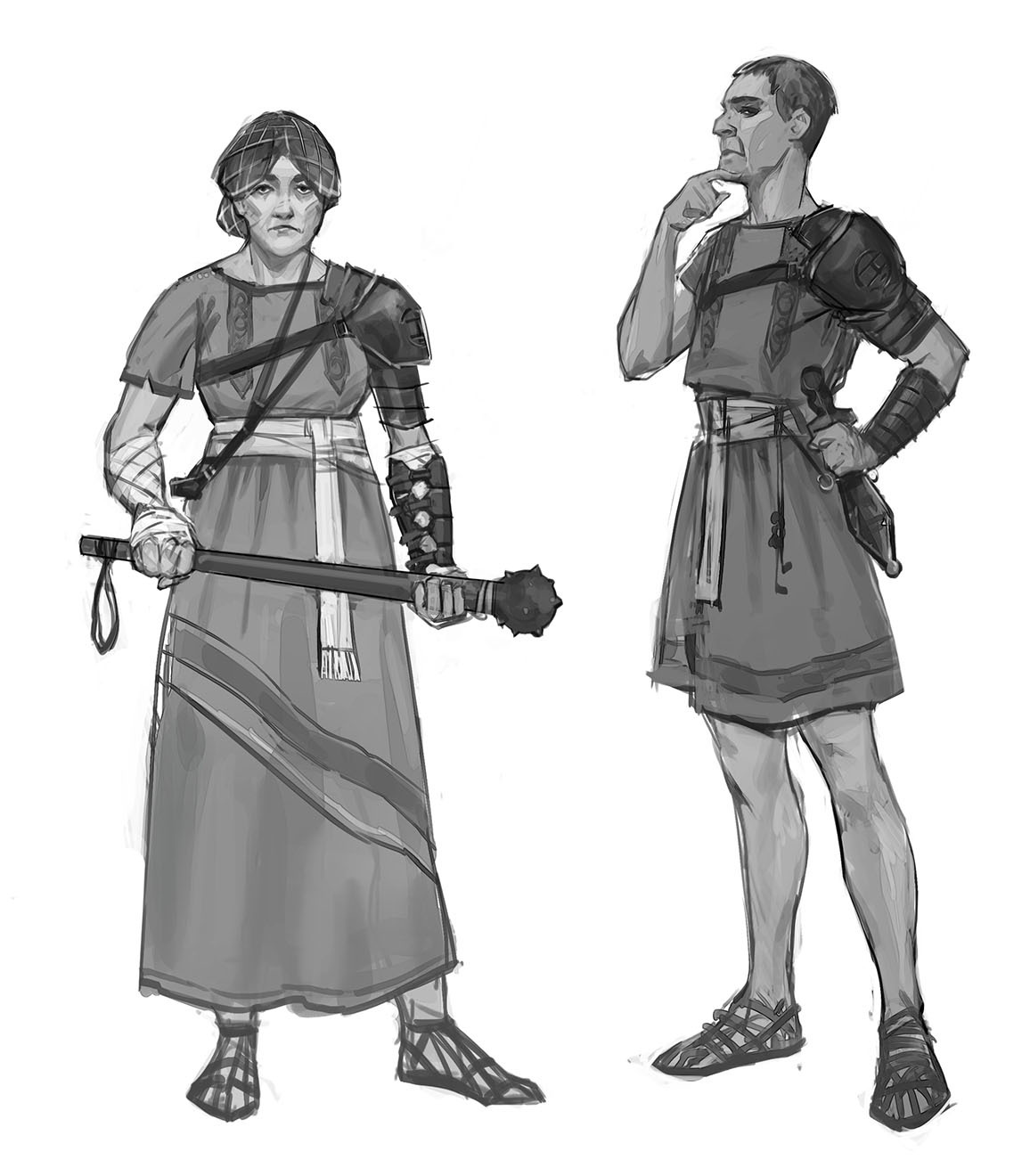
In 2022, the scholars gave us a series of lectures, about architecture, fashion, urban planning, economy, etc. And just recently when we showed Dr. Corbett some character concept art with different costumes for different wealth levels, Lindsay pointed out “textiles rarely pictured vegetal designs in the roundels, but it was very very common to see animals”, so not just pointing out things that ‘stick out’ from a Constantinople flavor perspective, but also suggesting solid improvements.
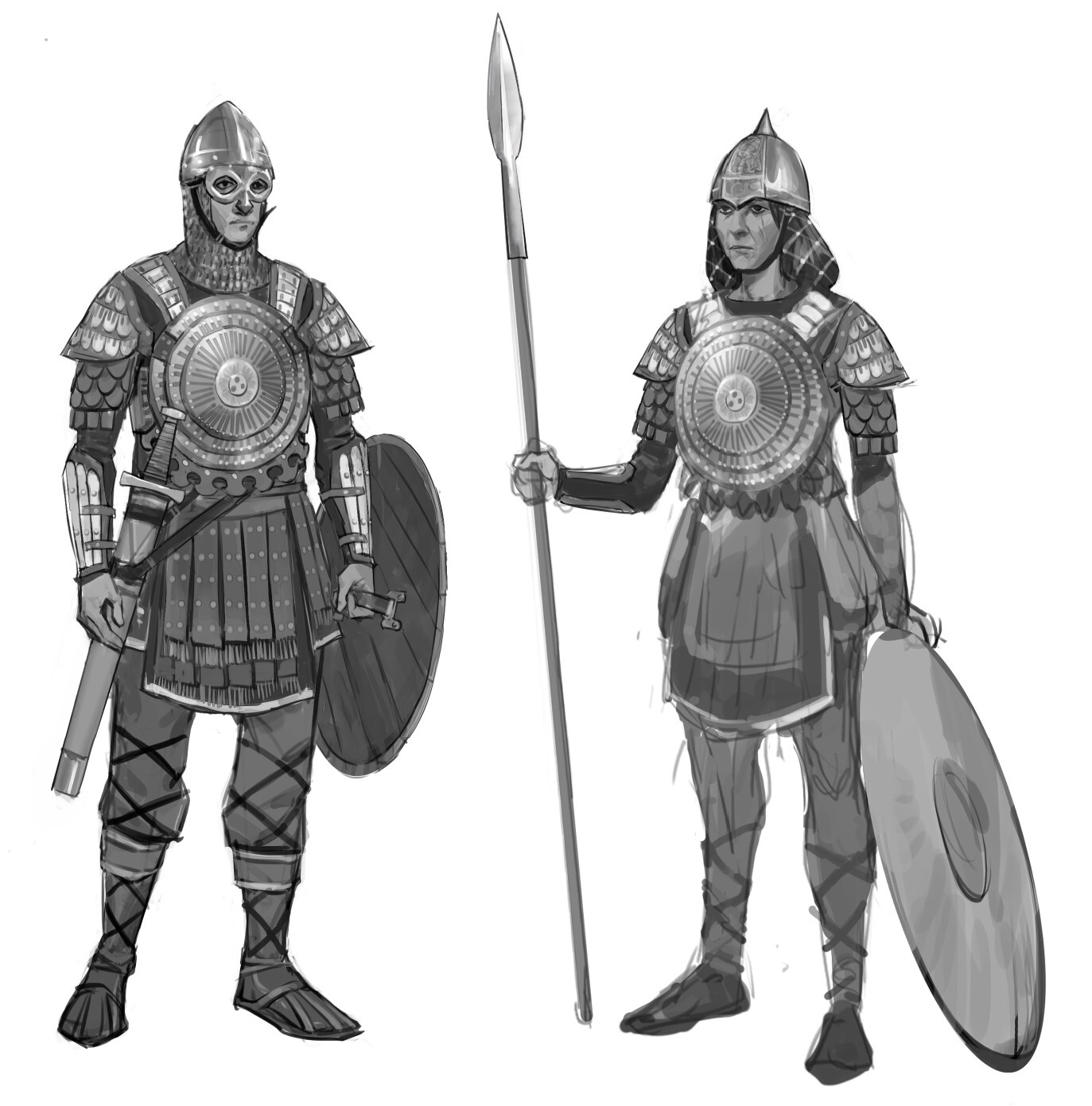
As much of late antiquity Constantinople still retains a Roman flavor we may occasionally cherry pick elements from later in its history. This elite guard armour is more typical of the 10th century but we’re going with it because it’s very distinctly Byzantine.
Ultimately, Fortuna is a fictional city, but we want it to feel lived-in and genuinely Byzantine. I see historical Constantinople as the equivalent of a lore bible, filled with references we can use whenever we’re not sure how to move forward, but which we’re also allowed to change.
Still, we bend “reality” to suit the needs of gameplay and production, and to create the experience we want. Our city, for example, probably will have higher-wealth residences on higher floors to challenge thieves even though it was often the opposite in reality (street-level apartments were much more expensive due to the convenience).
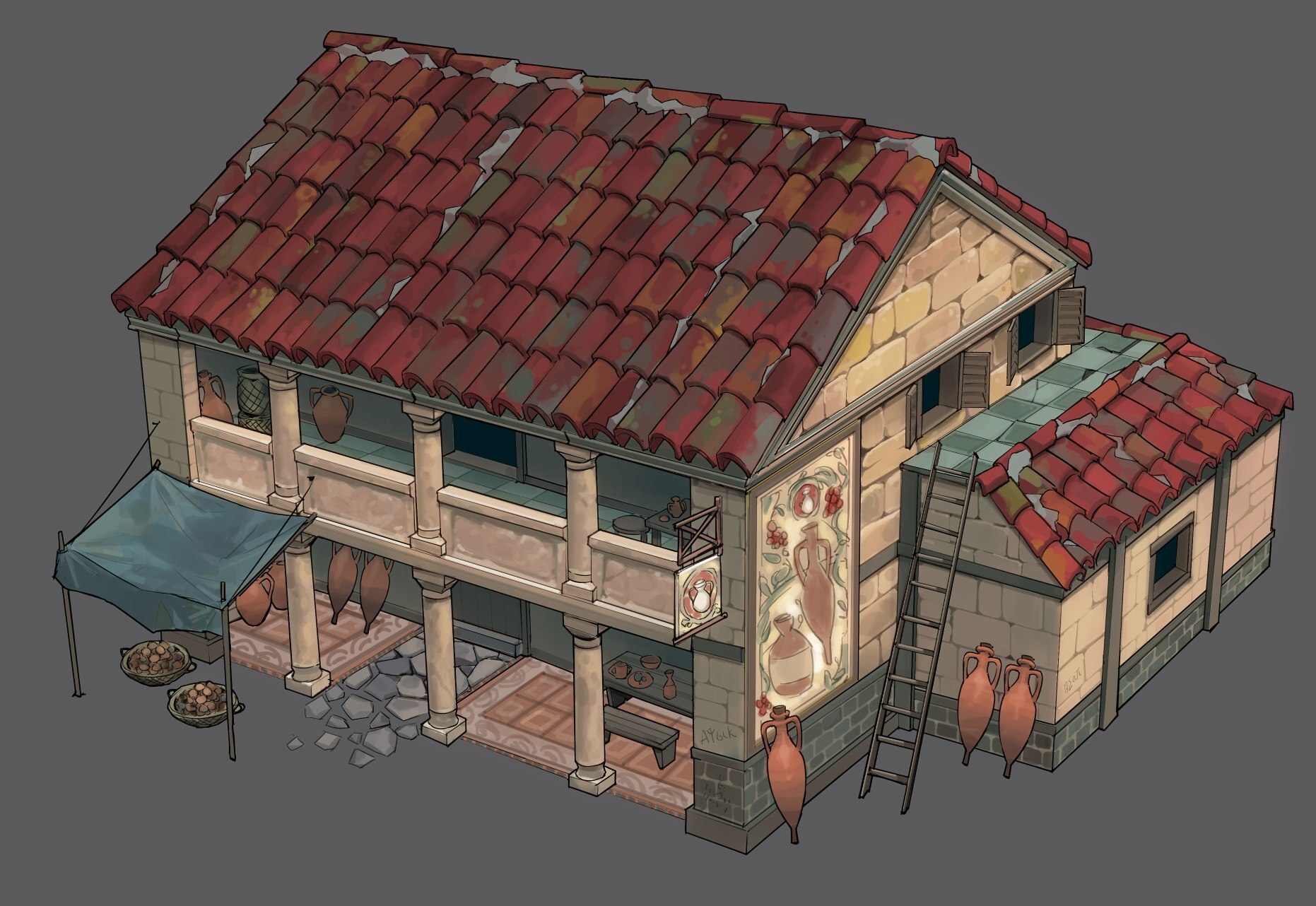
In this case someone has conveniently placed a ladder right where you need it but normally you would be required to sneak through the rest of the house to get to the goods on the second story.
Obviously the details of the implementation are subject to change as gameplay develops. If you have questions about the setting or anything else (Istanbul travel tips?) feel free to post them here or in the Discord! Next time we’ll turn our attention to the megasim side with a look into the tools being used to procedurally generate locations and simulate the world down to the composition of alloys.
|